How it works
From first thought
to everyday life.
A successful aquarium is a design project and a living system. Planning the room, the equipment and the care together gives every decision a purpose.
- 01
Start with your room
Choose an inspiration concept, a freshwater or marine ecosystem and a few initial preferences. Save a project brief with the dimensions and questions you want to explore.
- 02
Resolve the details
A real commission would begin with a site survey: access, structure, utilities, ventilation, viewing positions and service space. The design and written scope follow from that work.
- 03
Build & install
The tank, supporting cabinet and equipment are coordinated before delivery. Installation includes positioning, connections, leak checks and an agreed handover plan.
- 04
Let the system establish
Water is introduced and the system is commissioned over time. Livestock is introduced gradually, and only once the aquarium is ready. The scroll animation compresses that time.
- 05
Keep it thriving
An ongoing care plan covers observation, water checks, cleaning, plant or reef care and equipment review. Its frequency and scope are tailored to the actual installation.
Commissioning takes time
Water first.
Life, when it is ready.
Scroll through a compressed sequence of installation and commissioning. In a real aquarium, water checks and biological establishment happen over elapsed time. Fish are not added immediately after filling.
The animation compresses time. It is not a husbandry guide or a recommended stocking timetable.

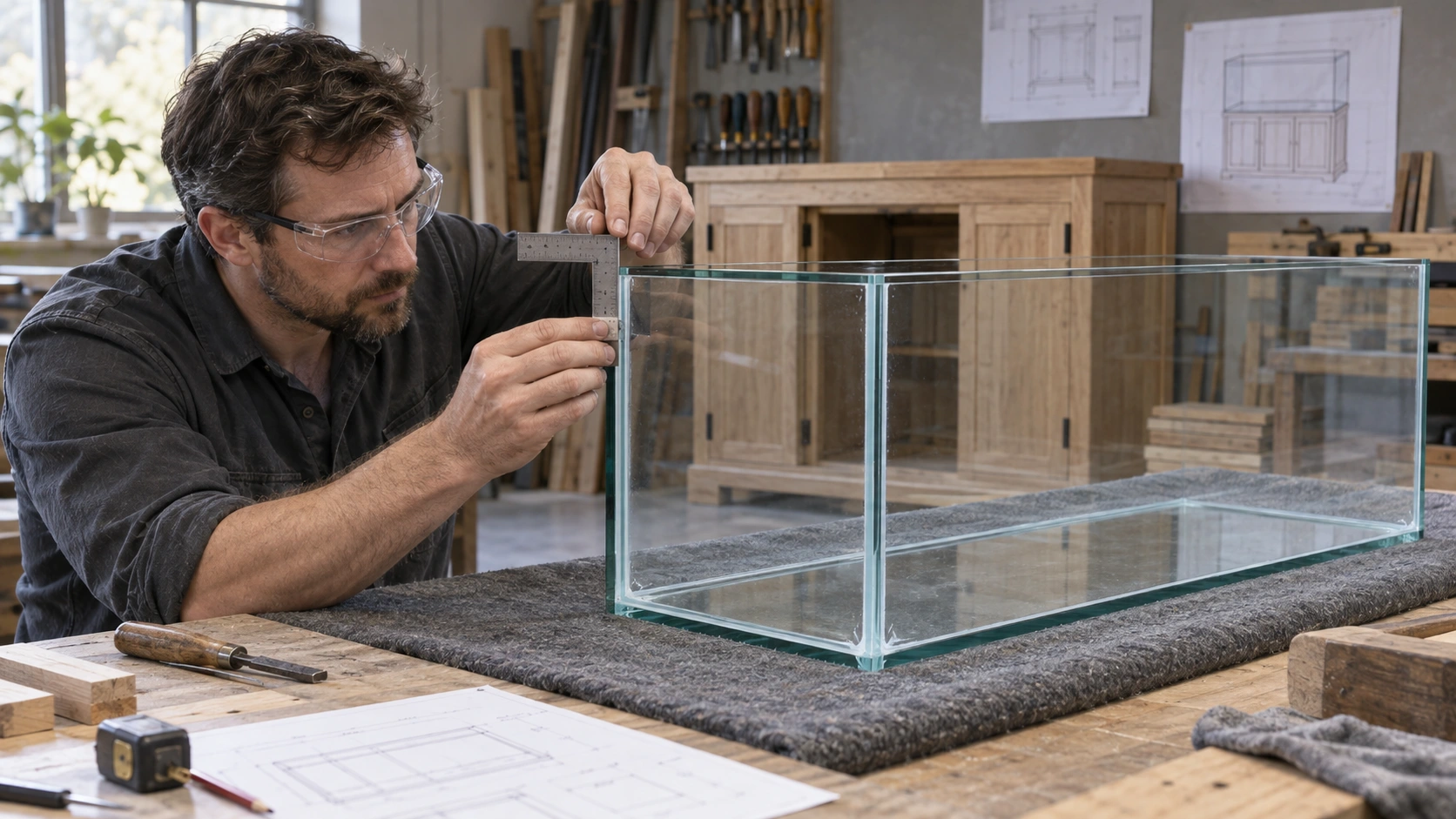
The tank and cabinet are installed, then checked for leaks and level.
Before anything is ordered
A clear scope.
No hidden assumptions.
A real proposal should identify what is included, what depends on a site inspection and which work belongs to other trades. Cabinetry, tank construction, supporting structure, delivery access, equipment and ongoing care should all be discussed.
- A measured site and access review.
- A written equipment and finish specification.
- An agreed installation and commissioning plan.
- A practical handover and care arrangement.
Your next chapter
Imagine it in your room.
Start with an inspiration concept. Adjust the setting, save your choices and build a brief at your own pace.